⚡ Quick facts
- Difficulty
- Very Easy
- Crop type
- Hardy Annual
- Position
- Full Sun or Shade — remarkably tolerant
- Soil
- Any — extremely unfussy; poor soil acceptable
- Container friendly
- Yes — troughs and windowboxes outdoors
- Greenhouse recommended
- Extends harvest in very severe winters
- Outdoor suitable
- Yes — all UK regions; fully frost-hardy
- Frost hardy
- Fully hardy — survives -10°C and below without protection
01 About
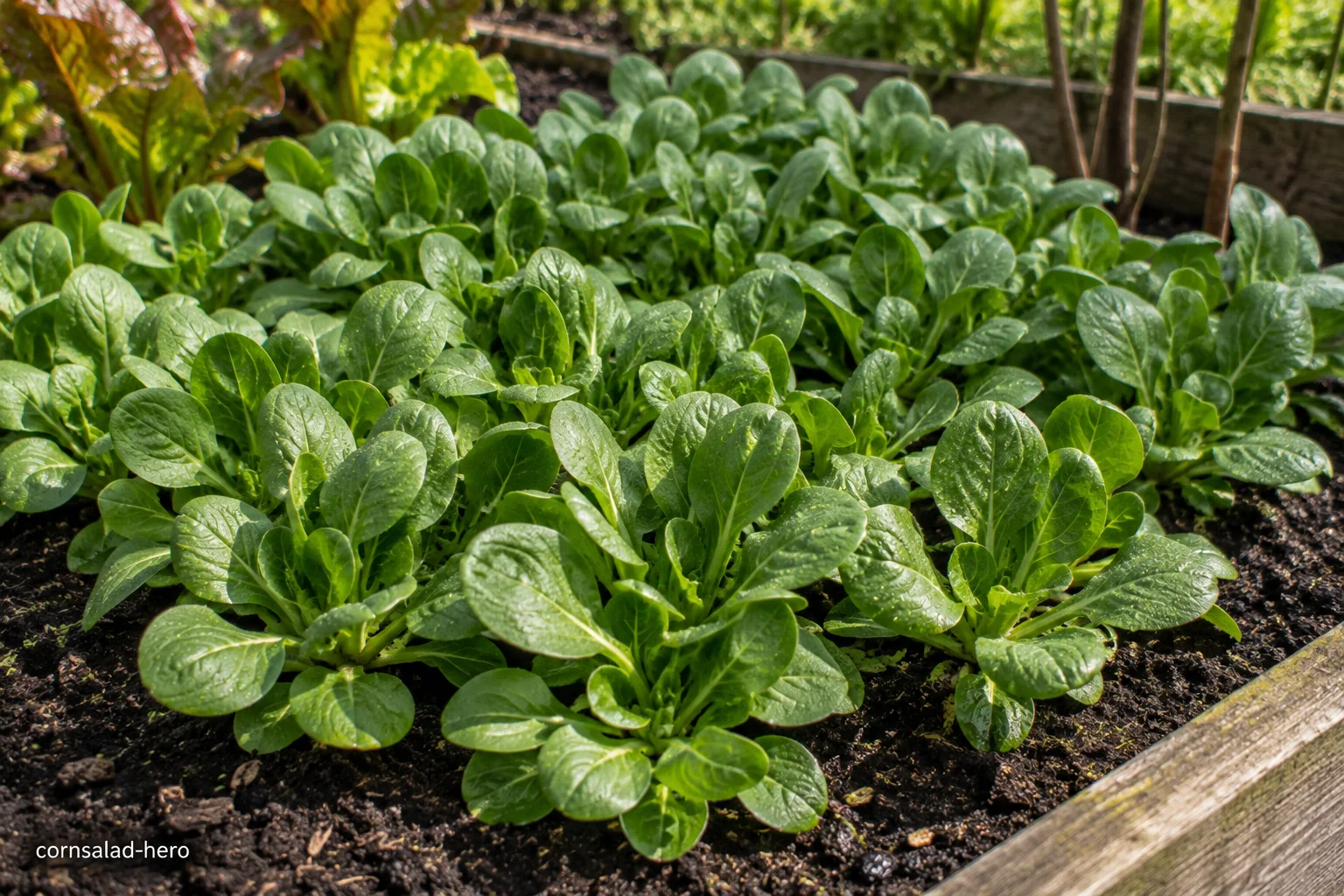
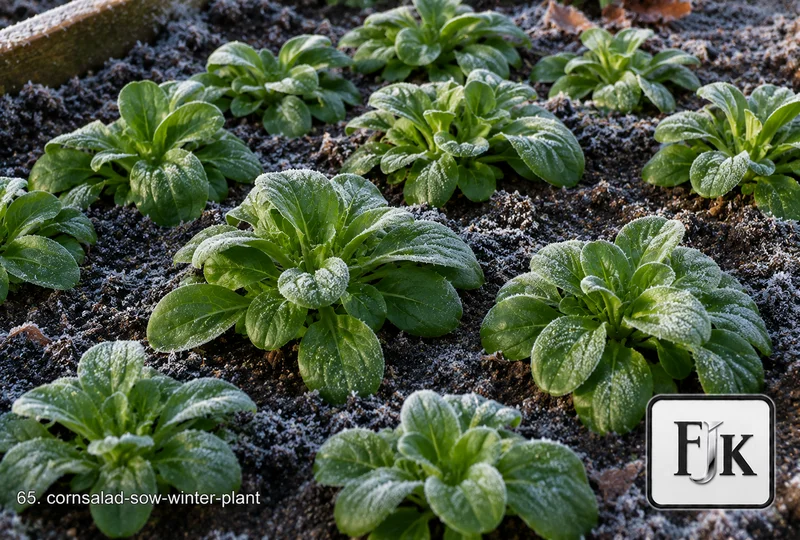
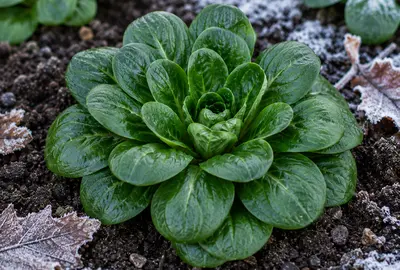
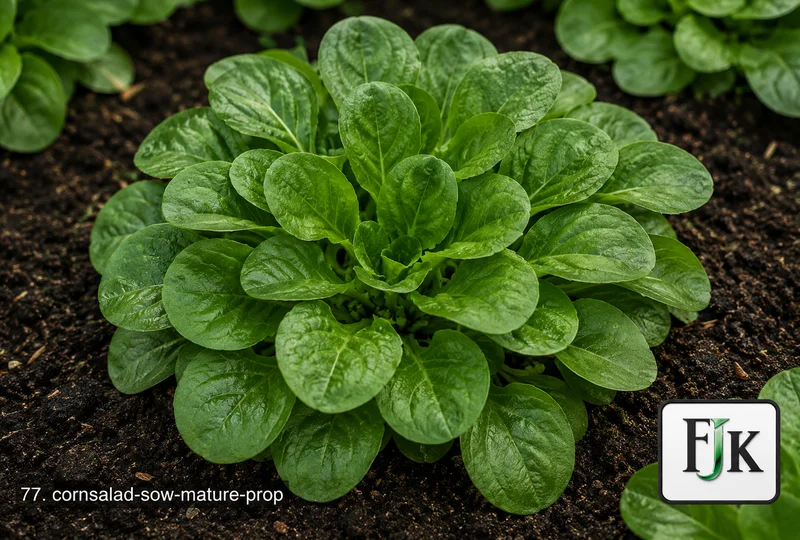
Corn salad — known variously as mâche, lamb's lettuce, and field salad — is the most cold-hardy salad crop it is possible to grow in the UK. While every other salad leaf disappears under frost, corn salad forms compact, low-growing rosettes that survive temperatures well below -10°C and continue producing harvestable leaves from October right through to April. The flavour is mild, slightly nutty, and quite distinctive — nothing like lettuce or spinach. In France, where it is called mâche and has been a cornerstone of winter salad growing for centuries, it is prized as a luxury salad leaf. In the UK it remains underused, which is a genuine oversight: it asks for almost nothing in terms of care, takes up very little space, and fills precisely the hungry gap in the kitchen garden when nothing else is available. A single late-summer sowing provides salad leaves every week through the entire winter.
02 What to Grow
Corn salad varieties differ primarily in leaf size, rosette habit, cold tolerance, and speed of growth. The traditional French varieties — Verte de Cambrai, D'Étampes — are small-leaved, extremely cold-hardy, slow-growing, and have the finest flavour. Dutch large-leaved types like Hollanda and Cavallo produce bigger rosettes and higher yields but are slightly less cold-tolerant. Modern varieties like Vit and Favor are bred for commercial production — fast, uniform, and productive — and perform very well in the garden. All types are cut-and-come-again and can be harvested as individual leaves or as whole rosettes cut at the base. For a long winter season, sow a mix of traditional and modern types together.
03 Varieties
The number of varieties shown for each crop is based on UK consumption data (2025/26) — the more popular the crop, the more variety choices we include.
🇫🇷 Traditional French Varieties
Small-leaved, compact, exceptionally cold-hardy varieties developed by French market gardeners over centuries. Slower-growing than modern types but with the finest, most complex nutty flavour. The gold standard for winter mâche.
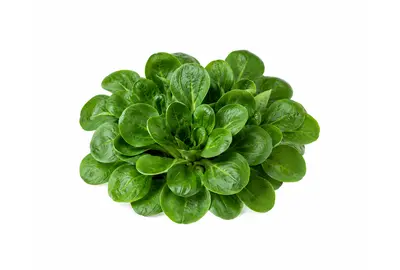
Verte de Cambrai
French Heritage · Small-Leaved
The defining French mâche variety — named for the town of Cambrai where it was developed by market gardeners. Produces very small, dark green, spoon-shaped rosettes with an intensely nutty, slightly mineral flavour. Exceptionally cold-hardy and slow-growing. The traditional choice for finest-quality winter mâche. Seeds prolifically and self-seeds reliably in UK conditions.
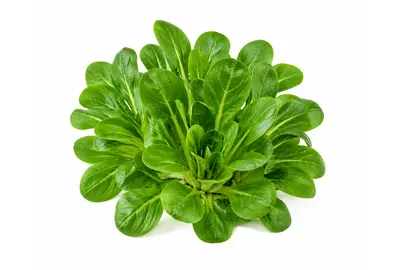
D'Étampes
French Heritage · Medium-Leaved
Traditional French market variety named for the town south of Paris where it was grown for the Halles market. Medium-sized rosettes with rounded, mid-green leaves and excellent cold tolerance. Slightly larger than Verte de Cambrai but with the same deep, nutty flavour. One of the most reliable French heritage types for UK winter growing.
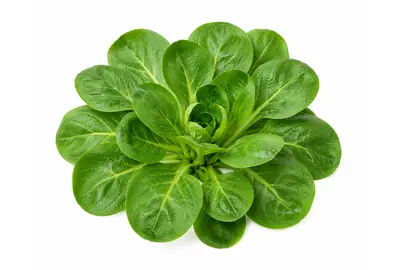
Hollanda
Dutch · Large-Leaved
Dutch large-leaved type producing broad, rounded, open rosettes considerably bigger than traditional French varieties. Higher yielding per plant and faster to mature. Slightly milder flavour than small-leaved types. Excellent choice for gardeners who want more leaf per plant. Less cold-hardy than Verte de Cambrai but performs well in UK winters.
🌿 Modern Productive Varieties
Fast-growing, high-yielding varieties bred for commercial and garden production. Larger rosettes and quicker to harvest than heritage types. Good disease resistance. Excellent performance in UK conditions.
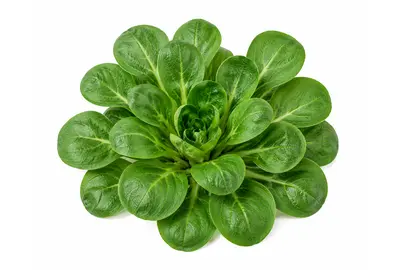
Vit
Modern · Upright
The most widely grown commercial corn salad variety worldwide and an outstanding garden performer. Produces upright, bright green rosettes that are faster-growing than any heritage type. Excellent uniformity and very good cold tolerance. The go-to variety for gardeners who want maximum productivity. Available from virtually all UK seed suppliers. Good flavour, though less complex than traditional French types.
Cavallo
Modern · Large-Leaved
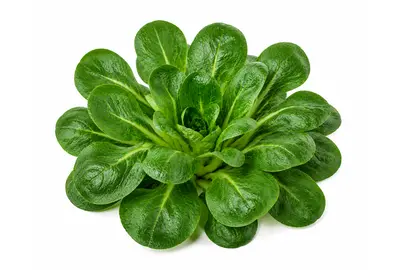
Robust, large-leaved modern variety with dark green, slightly blistered leaves forming a dense, substantial rosette. Outstanding disease resistance — particularly good mildew tolerance in wet conditions. Higher yielding per plant than most varieties. Very good cold hardiness. An excellent all-round performer for UK gardens, particularly in wetter, western regions where mildew can be problematic.
Favor
Modern · Upright Compact
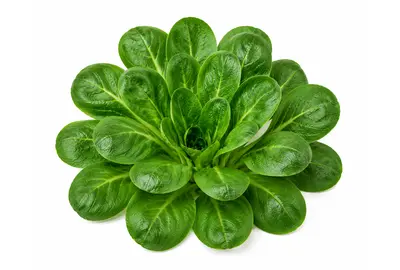
Modern variety bred specifically for mildew resistance with an upright, compact habit that improves air circulation and reduces disease pressure in crowded plantings. Medium-sized dark green rosettes with good flavour. Fast to establish and harvest. An excellent choice for gardeners who have had problems with downy mildew in previous corn salad crops or who grow in sheltered, humid conditions.
04 Where to Source
Corn salad seed is widely available from all major UK seed companies. The most commonly stocked varieties are Vit (fast and productive) and Verte de Cambrai (traditional French). For the full range including D'Étampes, Hollanda, Cavallo, and Favor, specialist salad seed suppliers are the best source. Corn salad seed is inexpensive and long-lived — a single packet provides several years of sowings. It is also occasionally available as plug plants in autumn, though direct sowing is so simple there is no advantage to buying plants.
05 Planting Options
🌿 Open Ground
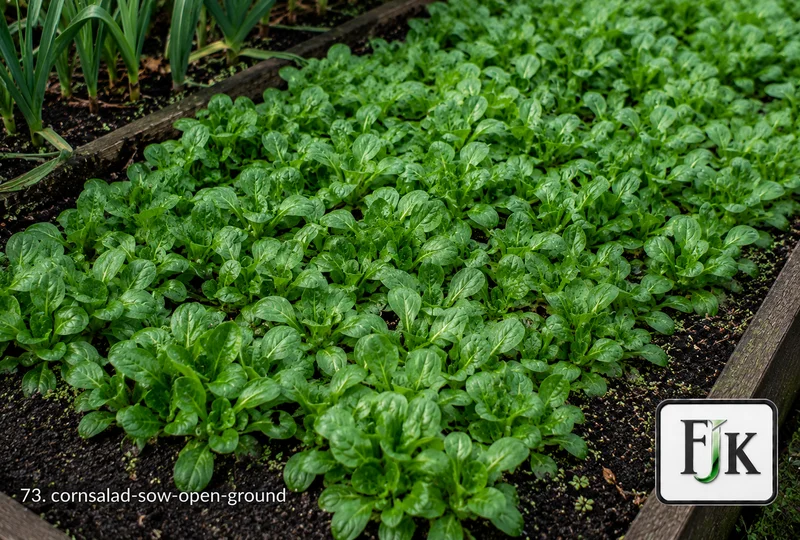
The standard and recommended method. Sow direct into any prepared bed in August or September in shallow drills 1cm deep. Corn salad germinates rapidly and establishes before cold weather arrives. It grows happily in full shade, partial shade, or full sun — one of very few crops that genuinely does not care about light levels. Leave plants in the ground all winter and harvest as needed. No protection needed in most UK winters.
Suitable varieties: All varieties. The simplest and most productive method.
🪟 Cold Frame or Cloche
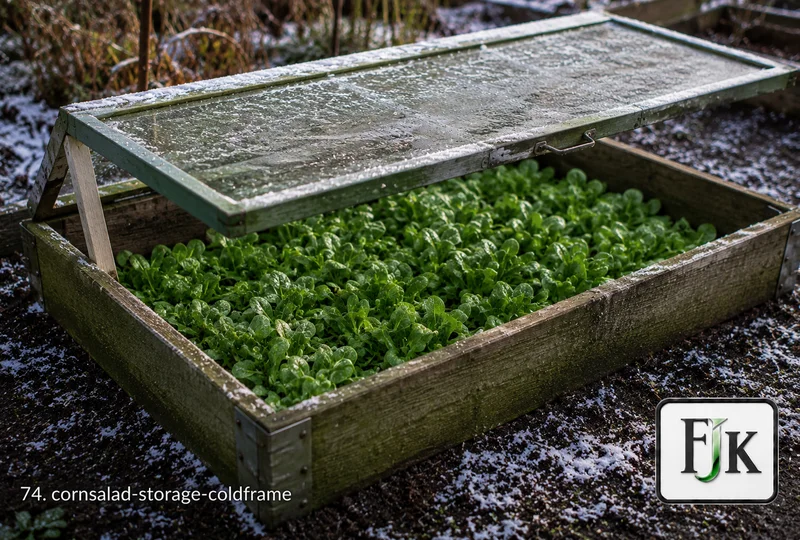
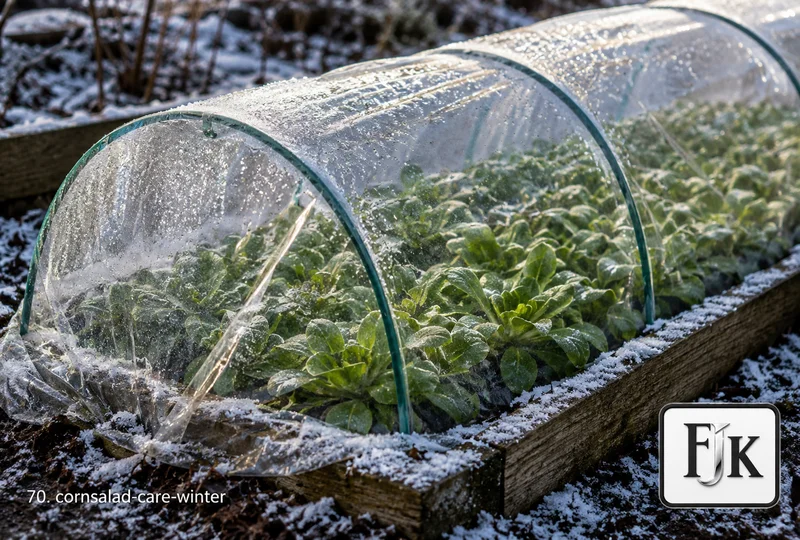
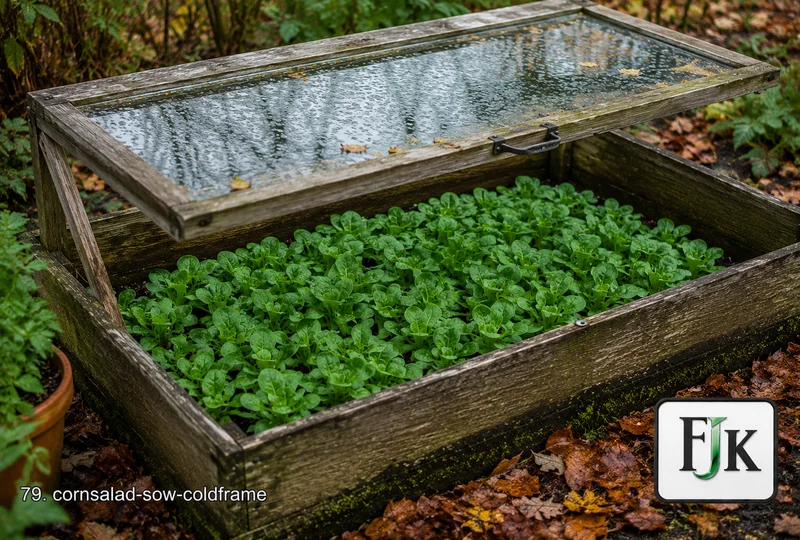
A cold frame or cloche is not essential for corn salad but extends the harvest in very cold spells when outdoor plants freeze solid. Sow under glass in September for the earliest and most reliable winter harvests. Under a cold frame, corn salad remains pickable through the hardest UK winters. This is the method used by French market gardeners producing mâche through Parisian winters for centuries.
Suitable varieties: All varieties. Particularly good for small-leaved French types which respond best to cold frame conditions.
06 Companion Planting
✅ Grow nearby
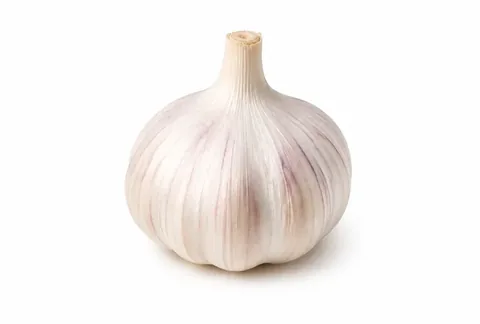
Garlic planted in autumn occupies the same bed space productively alongside corn salad. The two crops have compatible root depths and garlic's natural antifungal properties may help reduce mildew on corn salad in wet conditions.
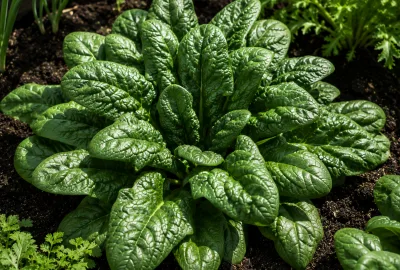
Spinach and corn salad have complementary growing seasons and can be sown together in late summer for a mixed winter salad bed. Corn salad fills in between slower-establishing spinach plants and both are harvested through the same period.
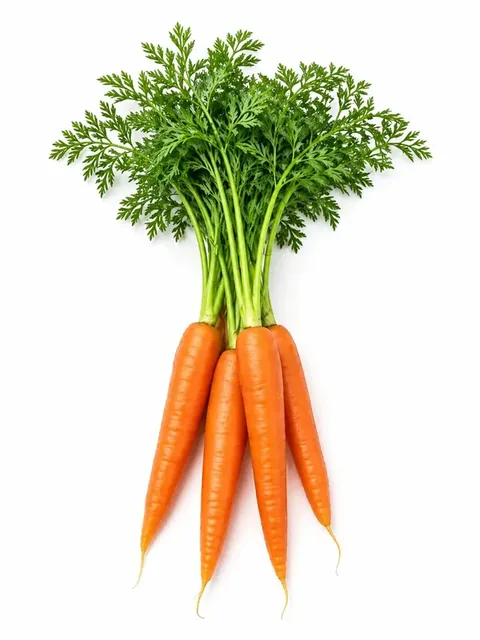
Corn salad sown between carrot rows uses the space productively while carrots are in their final growth phase. The low rosettes do not compete with carrot foliage and are harvested before carrots need the full bed space.
❌ Keep apart
- 🥦 Tall brassicas — Tall brassicas such as kale or Brussels sprouts cast too much shade and their dripping leaves in wet weather create the damp, still conditions that encourage downy mildew on corn salad. Keep corn salad in open, well-aired positions.
- 🫛 Courgettes — Courgettes are a summer crop that will still be occupying bed space in August and September when corn salad must be sown. Plan the rotation to ensure corn salad follows a crop that is cleared by late July.
07 Sowing — How To
🌱 Late Summer Sowing (Aug–Sep)
Check the soil temperature
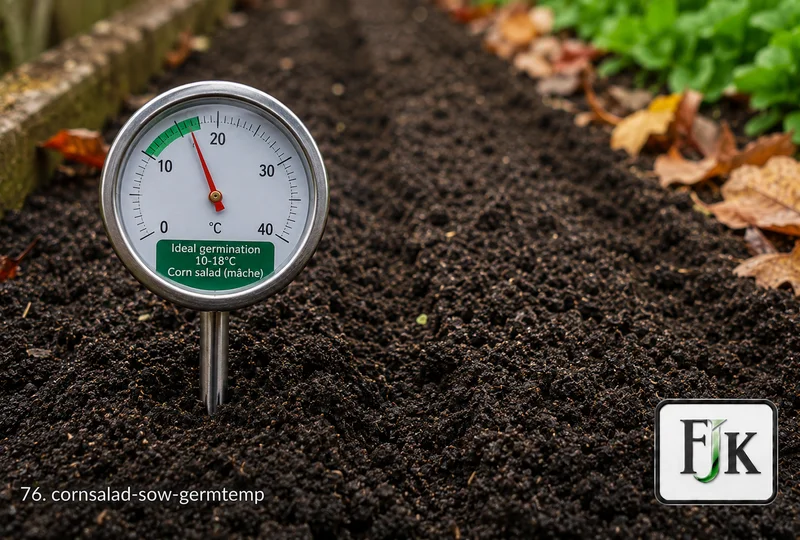
Corn salad germinates best between 10-18°C. A soil thermometer takes the guesswork out of timing — push it a few centimetres into the seedbed and check before sowing, especially for the late-summer sowing when temperatures are dropping.
Prepare a fine seedbed
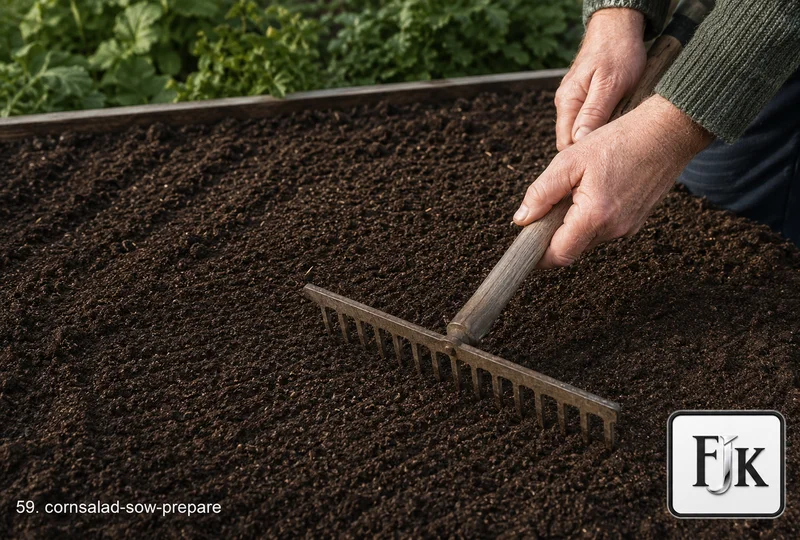
Rake any available bed to a fine, firm tilth. Corn salad is exceptionally unfussy about soil — it grows in poor, thin, sandy, or clay soils without complaint. The seedbed simply needs to be weed-free and level. No compost or fertiliser is needed.
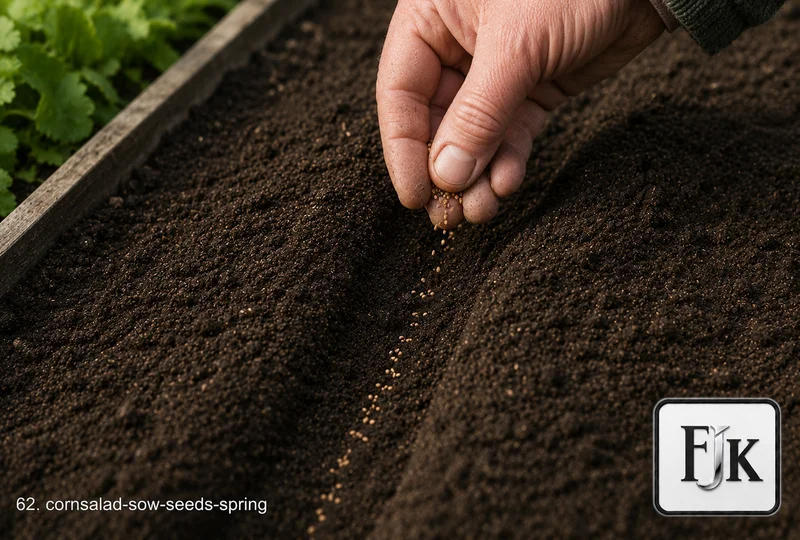
Draw very shallow drills
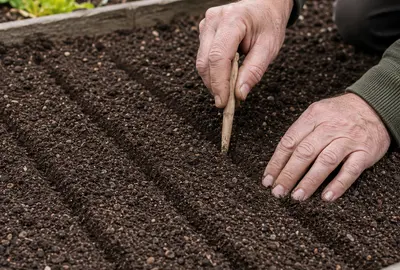
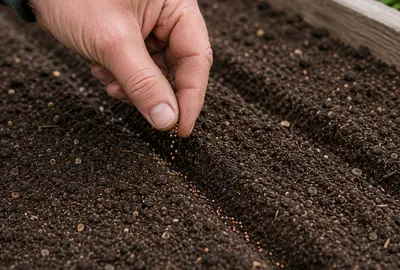
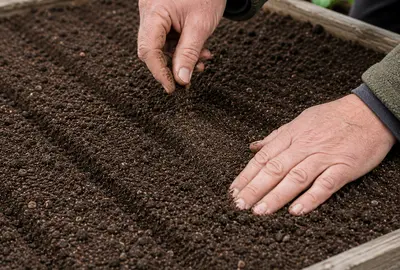
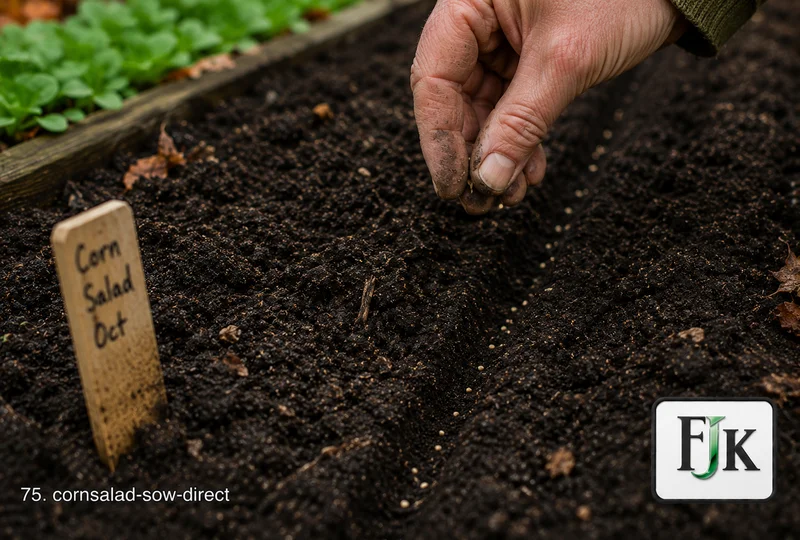
Use a cane or the corner of a trowel to draw very shallow drills — barely 1cm deep — spaced 15cm apart. Corn salad seeds are tiny and need only the thinnest covering of soil. Alternatively, broadcast-sow across the whole bed for a dense carpet-style planting.
Sow thinly
Sow seed thinly along the drills. Corn salad seeds are small but visible — space them roughly every 2–3cm. Do not sow too thickly as crowded seedlings are more prone to damping off in autumn conditions. For broadcast sowing, aim for approximately one seed per square centimetre.
Cover very lightly
Draw the finest possible layer of soil back over the seeds — no more than 5mm. Firm very gently with the back of a rake. Do not compact the surface. Water with an extremely fine rose immediately after sowing if the soil is dry.
Watch for seedlings
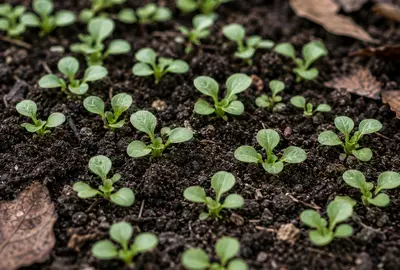
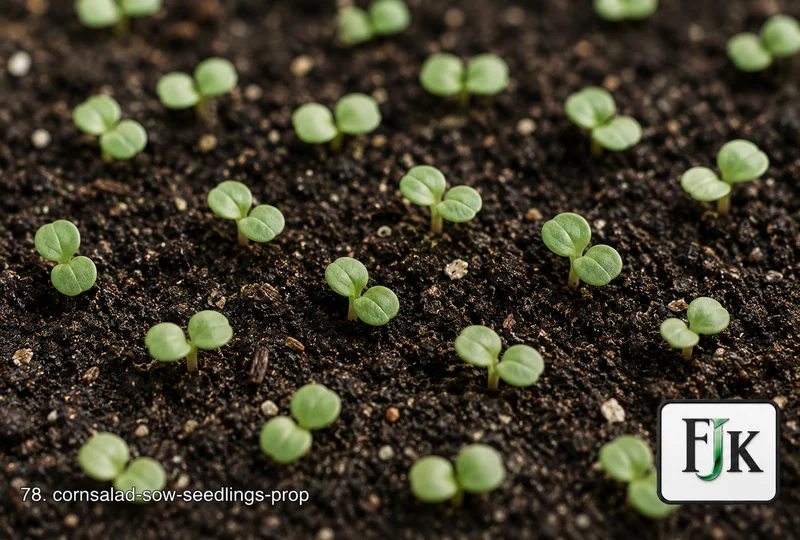
Corn salad germinates in 7–14 days in warm late-summer conditions. The emerging seedlings are very small — tiny paired rounded leaves at first. Keep the seedbed evenly moist until seedlings are established. Slugs can damage seedlings at this stage; protect if necessary.
Copes well with frost
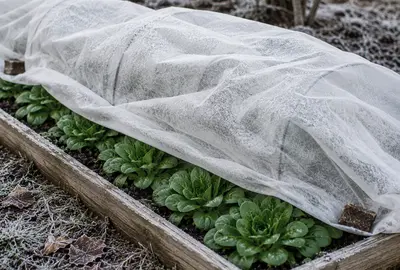
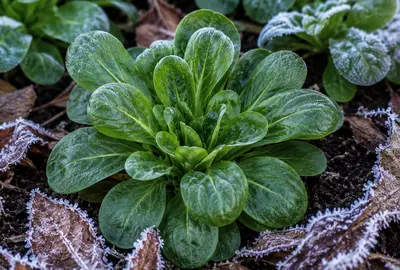
Corn salad is remarkably frost-hardy — established plants shrug off hard frosts and even snow, standing in the ground through winter with little protection needed. A cloche or fleece tunnel isn't essential but keeps leaves cleaner and growth steadier through the coldest spells.
First harvest from October
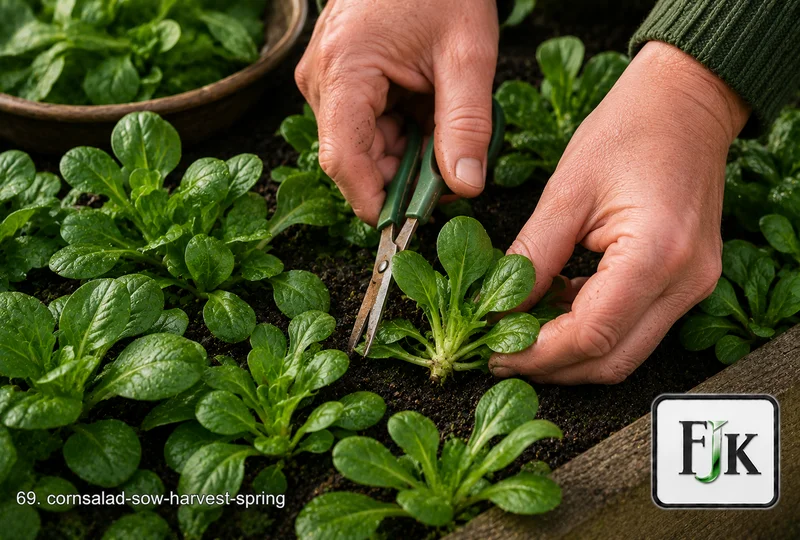
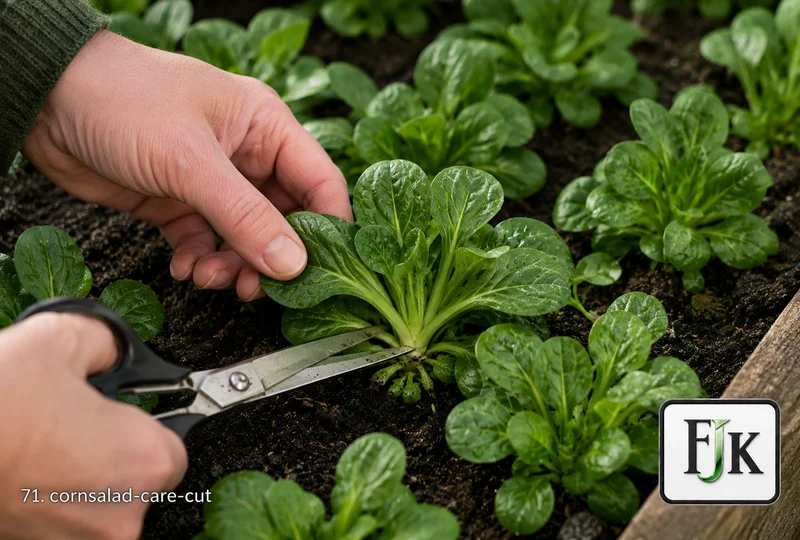
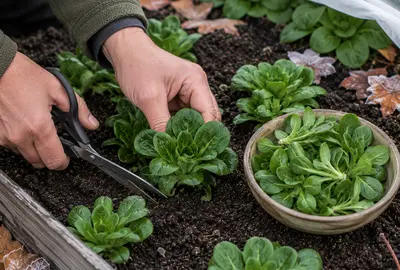
Plants develop into small rosettes within 6–8 weeks. Begin harvesting outer leaves or whole rosettes from October onwards. Cut whole rosettes at the base with scissors — the remaining stump may regrow for a second harvest. Leave plants in the ground throughout winter, harvesting as needed.
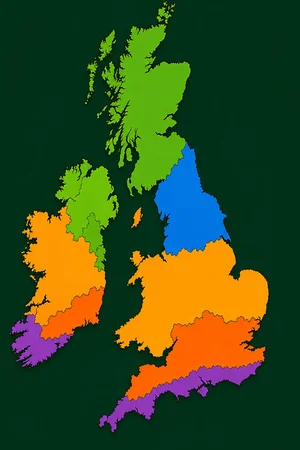
Late Summer Sowing (Aug–Sep) — regional timing| Region | Sow / plant | Harvest | Notes |
|---|
| Scotland & Far North | Aug–Sep | Oct–Mar | Aug–early Sep · Plant: N/A · Harvest: Oct–Mar |
|---|
| Northern England | Aug–Sep | Oct–Mar | Aug–Sep · Plant: N/A · Harvest: Oct–Mar |
|---|
| Midlands & Wales | Aug–Sep | Oct–Apr | Aug–Sep · Plant: N/A · Harvest: Oct–Apr |
|---|
| Ireland & Isle of Man | Aug–Sep | Oct–Apr | Aug–Sep · Plant: N/A · Harvest: Oct–Apr |
|---|
| South & SE England | Aug–Sep | Oct–Apr | Aug–Sep · Plant: N/A · Harvest: Oct–Apr |
|---|
| South Coast & SW | Aug–Oct | Oct–Apr | Aug–Oct · Plant: N/A · Harvest: Oct–Apr |
|---|
🌿 Spring Sowing (Mar–Apr)
Sow in early spring
Sow March to April in the same way as the late-summer sowing — very shallow drills, thin sowing, minimal covering. Spring-sown plants are smaller and shorter-lived than autumn-sown ones. They bolt relatively quickly as day length increases in May and June, so harvest promptly.
Sow in partial shade
Spring-sown corn salad benefits from some shade to delay bolting. Sow under or between taller crops, or on the north-facing side of a bed. Full sun in spring accelerates bolting significantly and reduces the harvest window.
Water in dry spells
Unlike autumn-sown plants which rely on natural rainfall, spring-sown corn salad may need supplemental watering during dry April and May periods. Water gently with a fine rose — heavy watering can dislodge tiny seedlings.
Harvest promptly
Spring-sown corn salad is ready 6–8 weeks after sowing. Harvest promptly and regularly — once flower stems begin to appear the leaves become bitter and the season is ending. Pick every few days to extend the harvest window as long as possible.
Allow a few to self-seed
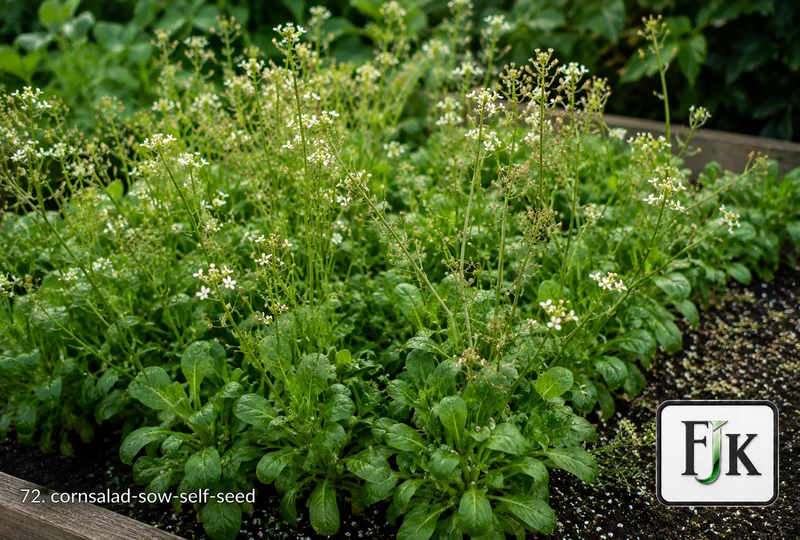
Leave 3–4 plants to run to seed and flower. Corn salad self-seeds prolifically — the tiny seeds fall to the ground and germinate in late summer exactly when you want a new crop, without any effort on your part. One spring sowing can provide a self-renewing supply indefinitely.
Clear and follow with summer crop
Once plants have bolted, pull them out promptly and use the space for a summer crop. Corn salad leaves the soil in excellent condition — it does not exhaust nutrients and its low-growing habit suppresses weeds through late spring.
Spring Sowing (Mar–Apr) — regional timing| Region | Sow / plant | Harvest | Notes |
|---|
| Scotland & Far North | Apr | May–Jun | Apr · Plant: N/A · Harvest: May–Jun |
|---|
| Northern England | Mar–Apr | May–Jun | Mar–Apr · Plant: N/A · Harvest: May–Jun |
|---|
| Midlands & Wales | Mar–Apr | May–Jun | Mar–Apr · Plant: N/A · Harvest: May–Jun |
|---|
| Ireland & Isle of Man | Mar–Apr | May–Jun | Mar–Apr · Plant: N/A · Harvest: May–Jun |
|---|
| South & SE England | Mar–Apr | Apr–Jun | Mar–Apr · Plant: N/A · Harvest: Apr–Jun |
|---|
| South Coast & SW | Mar–Apr | Apr–Jun | Mar–Apr · Plant: N/A · Harvest: Apr–Jun |
|---|
08 Using a Propagator
Corn salad does not need or benefit from a propagator. It germinates readily in cool outdoor conditions — in fact, germination is often better in the lower temperatures of late summer (15–18°C) than it would be in the warmth of a propagator. Always sow direct outdoors for this crop.
Heated propagator
A heated propagator is not appropriate for corn salad. This crop germinates best at cool temperatures (10–18°C) and performs better when sown direct outdoors in late summer than in any indoor environment. A heated propagator would actually reduce germination quality and produce drawn, weak seedlings unsuitable for outdoor planting.
Sow direct outdoors only
Corn salad should always be sown direct outdoors. It does not transplant well — the small, delicate root system is easily disturbed — and it germinates perfectly well at late-summer soil temperatures. Module sowing is occasionally used but offers no advantage over direct sowing for this crop.
Optimal germination temperature
Corn salad germinates best between 10°C and 18°C. August and September soil temperatures in the UK fall squarely in this range, making late summer the ideal sowing period. Seeds sown in very hot, dry August conditions may germinate more slowly — water the drill before sowing if the soil is very dry.
Seedlings emerge in 7–14 days
Germination is visible within 7–14 days in typical late-summer conditions. The first leaves are very small paired cotyledons. Keep the seedbed moist until plants are established. Young seedlings are the most vulnerable stage — protect from slugs if slug pressure is high in your garden.
No indoor care needed
Once sown, corn salad requires no indoor care, no pricking out, no potting on. Simply monitor the seedbed for moisture and slug damage until plants are 3–4cm tall, at which point they are self-sufficient. This is one of the easiest crops in the kitchen garden from sowing to harvest.
Cold frame option for coldest regions
In Scotland and northern England, sowing under a cold frame in September extends the harvest season significantly and provides more reliable winter production. Simply sow as for outdoors, place the frame over the bed, and leave the lid propped open until temperatures drop below 5°C. The frame keeps plants pickable through severe frosts.
09 Soil Requirements
- pH
- 5.5–7.0
- Best
- Most soils
- Tolerates
- Poor sandy, Clay, Loam
- Avoid
- Waterlogged
💡 Extremely tolerant of poor soils and partial shade. One of the least demanding crops.
10 Ongoing Care
🌨️ Frost Protection
Corn salad is fully frost-hardy and will survive UK winters outdoors without any protection in the vast majority of cases. However, in very hard frost (below -8°C for several consecutive nights), the outer leaves may freeze solid and become mushy on thawing, reducing harvest quality. A single layer of horticultural fleece laid directly over plants in such conditions keeps them in perfect harvestable condition. The fleece can be removed during mild spells and the plants will be completely undamaged. In Scotland and northern England, a cold frame or cloche provides a more reliable winter harvest than outdoor-only growing.
💧 Watering
Corn salad grown through autumn and winter requires almost no supplemental watering — UK rainfall is generally sufficient for its modest needs. Water only in two situations: immediately after sowing if the late-summer soil is dry (to ensure germination), and during any extended dry spell in autumn before plants are established. Once plants are 4–5cm across and growing actively, they are entirely self-sufficient. Spring-sown plants may need occasional watering during dry April and May periods. Never overwater — corn salad in waterlogged soil quickly develops root rot.
✂️ Harvesting
Harvest corn salad in two ways: cut the whole rosette at the base with scissors, leaving a 1cm stump which may regrow; or pick individual outer leaves continuously from multiple plants. For the finest presentation — small, intact rosettes perfect for a salad bowl — cut whole plants at the base and wash carefully, as the leaves trap soil particles. For continuous supply, harvest from multiple plants across the bed, taking a few leaves from each rather than stripping any single plant. The flavour is sweetest and most nutty in the coldest months; harvest generously in December through February when corn salad is at its finest.
11 Watch Out For
WarningCorn salad is almost entirely problem-free — this is one of its great virtues. Slugs are the only significant threat, and only during the seedling stage in early autumn. Once the rosettes are established (3–4cm across) slugs largely leave them alone. Self-seeding can become prolific if plants are allowed to set seed freely in spring — collect or cut seed heads before they scatter if you want to control where the next generation appears. Downy mildew occasionally affects plants in very wet, still conditions; improve air circulation by not sowing too densely.
🐛 Insects & pests
- 🐌 Slugs & Snails — Silver slime trails on leaves, soil, and pots — often the first sign before damage is found
- 🐜 Aphids (Blackfly & Greenfly) — Curled, distorted, or stunted growing tips — aphids inject saliva that causes leaf curl to protect them
🍄 Diseases to watch
- 🩶 Botrytis (Grey Mould) — Botrytis cinerea (grey mould) is the most ubiquitous fungal pathogen in temperate gardens — present in virtually every garden soil and on plant debris. It becomes a disease only when conditions favour it: cool, humid, poorly ventilated environments with damaged or senescent plant tissue. In a greenhouse in autumn it can destroy an entire tomato or grape crop.
Full identification and treatment advice is in the Pests and Diseases sections.
12 Storage & Preserving
🧊 Refrigerator Storage
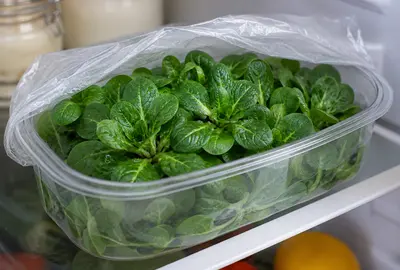
Corn salad keeps well in the refrigerator for 3–5 days after harvesting. Place unwashed rosettes in a loosely covered container or sealed bag with a sheet of damp paper towel to maintain humidity. Do not wash before refrigerating — the leaves are fragile and wet storage accelerates deterioration. Wash only immediately before use. The flavour is fully retained in refrigerator storage; corn salad does not become bitter or lose its nutty character as quickly as lettuce or spinach.
❄️ In-Ground Winter Storage
The finest storage method for corn salad is no storage at all — leave plants in the ground and harvest as needed throughout winter. This is the traditional method and produces leaves of far higher quality than anything harvested, stored, and eaten later. The bed acts as a living larder: plants remain at peak quality in the ground and can be picked the moment before eating. A raised bed or cold frame of corn salad is the most reliable fresh salad source available to a UK kitchen garden from October to April.
🥗 Serving Fresh
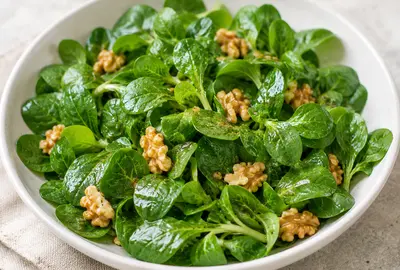
Corn salad is always eaten raw and is always at its best eaten immediately after picking. The classic French preparation is a simple mâche salad dressed only with walnut oil, a few drops of good wine vinegar, salt, and a handful of walnut halves — a combination that perfectly complements the mild, nutty flavour of the leaves. Corn salad also works beautifully as a bed for warm ingredients: roasted beetroot, lardons, croutons, or sliced apple with blue cheese. Its mild flavour makes it one of the most versatile salad leaves for combining with strong-flavoured accompaniments.
13 Expert Tips
💡 The self-seeding habit of corn salad
The self-seeding habit of corn salad is one of the most valuable features of any plant in the kitchen garden. Sow once, harvest all winter, allow 3–4 plants to flower and set seed in spring, and corn salad will reappear every August in exactly the right spot without any further effort. After the first year, many gardeners never need to sow it again — it simply appears, year after year, filling the autumn gap exactly when it is most needed.
💡 Corn salad is one of the
Corn salad is one of the very few crops that actively performs better in poor soil than in rich soil. In compost-enriched, nitrogen-rich beds it produces lush, soft growth that is more attractive to slugs, more prone to downy mildew, and less cold-hardy than plants grown in lean, unfed soil. Always use corn salad to follow a hungry crop — brassicas, potatoes, squash — rather than following a well-fed bed.
💡 Harvest corn salad in the early
Harvest corn salad in the early morning in winter when the leaves are most crisp and hydrated. The small rosettes trap soil particles between their leaves — wash in cold water in a bowl rather than under a running tap, which can bruise the delicate leaves. Spin dry very gently or shake rather than using a salad spinner, which can damage the small rosettes. Dress the salad at the very last moment before serving.
14 Common Mistakes
⚠ Sowing Timing
- Missing the late-summer sowing window — corn salad sown after October produces very little before winter; the August–September window is critical for a productive winter crop
- Sowing too deeply — the seeds are tiny and need only 5mm of covering; deep sowing prevents germination entirely
⚠ Ongoing Care
- Overwatering in winter — corn salad in waterlogged soil develops root rot; rely on natural rainfall and only water at sowing time and in dry autumn spells
- Failing to protect seedlings from slugs — the young seedling stage in September is the only period of real vulnerability; once plants are established rosettes, slugs largely ignore them
⚠ Harvest
- Waiting too long to harvest in spring — once flower stems appear the leaves become bitter rapidly; harvest the whole bed promptly when bolting starts
- Discarding the whole plant after the first cut — corn salad stumps often regrow for a second, smaller rosette; leave cut stumps in the ground for 2–3 weeks before pulling