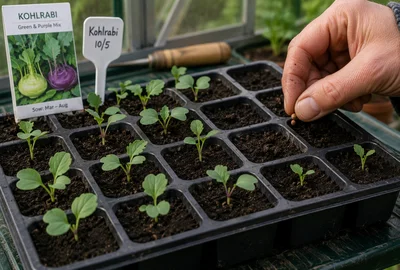
Sow direct or in modules from March onwards — no heat needed
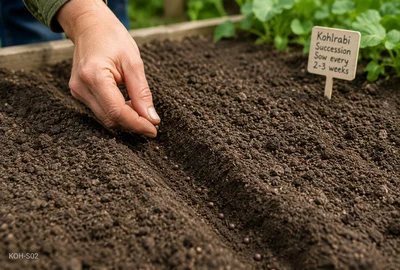
Sow a short row every 2–3 weeks for continuous supply from June to October
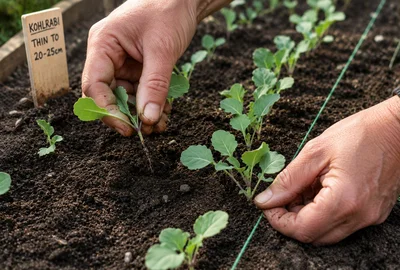
Thin or space to 20–25cm in rows 30cm apart
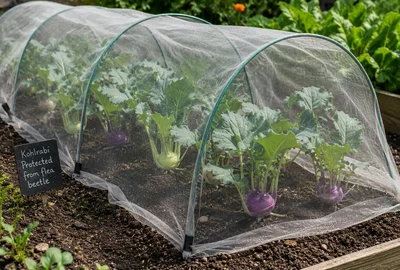
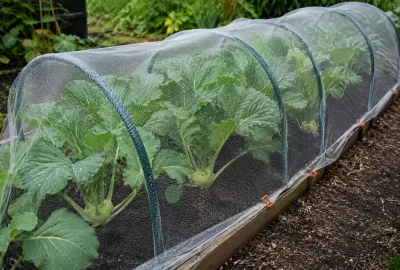
Net with fine insect mesh immediately after sowing — flea beetle strikes fast
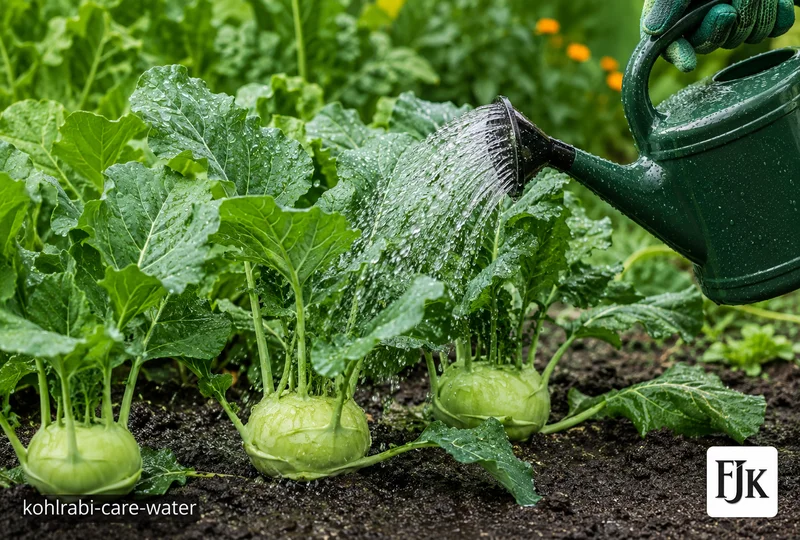
Water consistently — irregular watering splits the stem
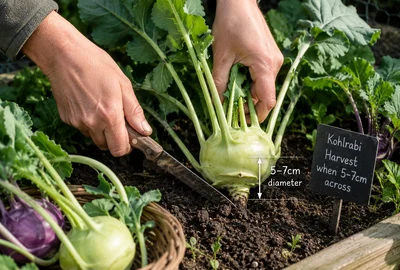
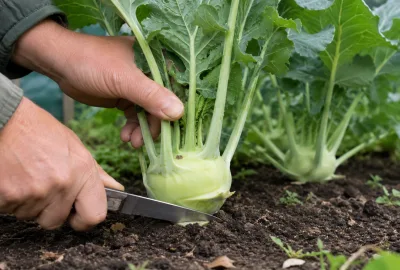
Harvest standard varieties at 5–7cm diameter without delay — they turn woody quickly
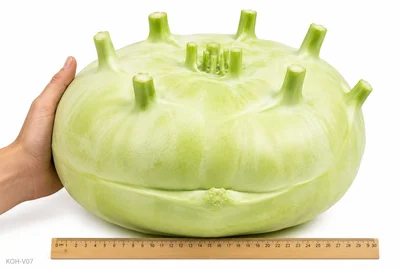
Giant types (Superschmelz, Gigante) can be left to grow much larger and stay tender
🌱 SowMar–Aug (direct or modules)
🌾 HarvestJun–Oct
☀ PositionFull sun
📐 Spacing20–25cm
DifficultyEasy
⚡ Quick facts
Difficulty
Easy
Crop type
Hardy Annual
Position
Full Sun
Soil
Fertile, Well-Drained, pH 6.5–7.5
Container friendly
Yes — deep containers work well
Greenhouse recommended
No
Outdoor suitable
Yes — all UK regions
Frost hardy
Yes — tolerates light frost
01 About
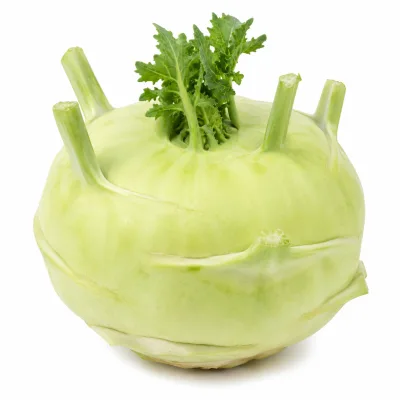
Kohlrabi is one of the most underrated and rewarding vegetables in the British kitchen garden. It forms a swollen stem bulb above soil level — crisp, sweet, and faintly nutty, tasting like a cross between a mild turnip and a fresh apple. It is equally good raw in slaws and salads, or roasted until caramelised and tender. Kohlrabi grows extraordinarily fast — from seed to harvest in as little as 6 to 8 weeks — and is one of the most reliable crops for successional sowing throughout the season. It is far easier to grow than most people expect, tolerating a wide range of soils and conditions, and producing handsome plants with architectural upright stems.
02 What to Grow
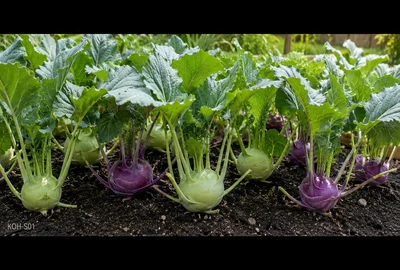
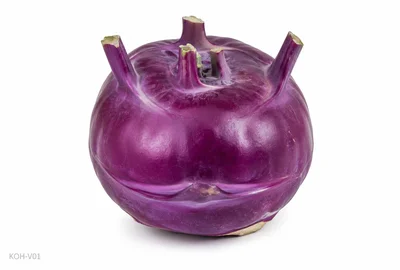
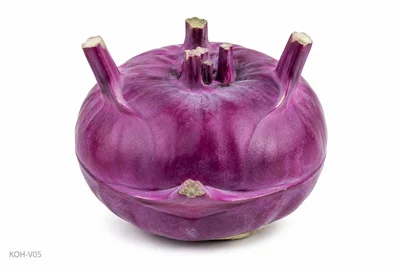
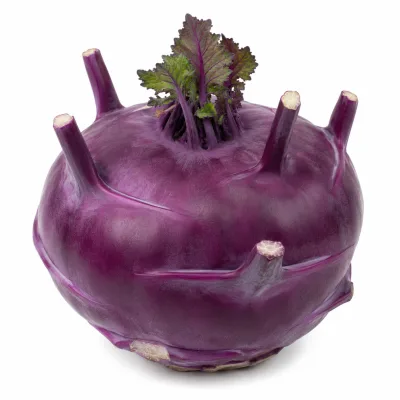
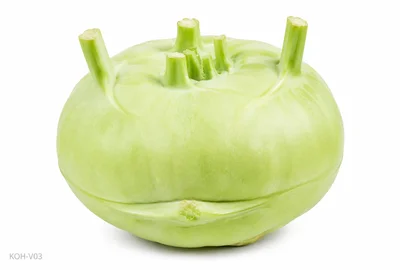
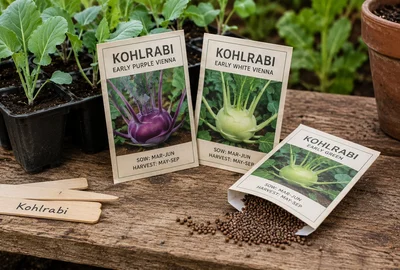
Kohlrabi comes in two colours — green-skinned and purple-skinned. Both taste essentially the same; the colour is skin-deep only. There are also giant varieties capable of growing to grapefruit size or beyond while remaining completely tender, and compact fast-maturing F1 hybrids suited to successional sowing. Choosing the right variety for your needs — whether speed, size, colour, or flavour — makes the difference between a good harvest and a great one.
03 Varieties
The number of varieties shown for each crop is based on UK consumption data (2025/26) — the more popular the crop, the more variety choices we include.
🟢 Green & White Varieties
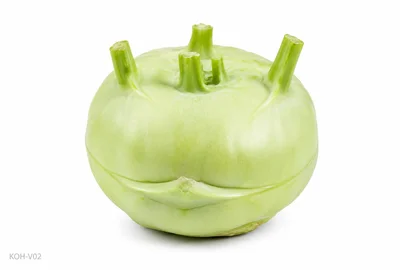
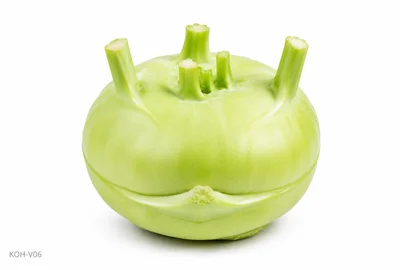
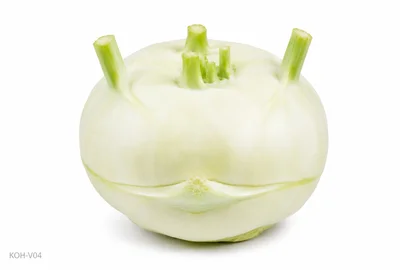
Pale green-skinned kohlrabi — the most widely grown group. Fast, reliable, and excellent raw or cooked.
Logo F1
Green · F1
A reliable, compact green F1 hybrid producing smooth, uniform bulbs. Fast-maturing and suited to successional sowing throughout the season. Excellent fresh or cooked. Holds well without going woody.
F1
Outdoors
Beginners
⭐ Reliable
Quickstar F1
Green · F1
One of the fastest-maturing kohlrabi varieties available. Very smooth, small to medium pale green bulbs of uniform shape. Ideal for close successional sowing at 2–3 week intervals.
F1
Outdoors
Beginners
Early
White Vienna
Green · Heritage
The classic heritage green kohlrabi. Pale green-white round bulbs with a mild, sweet flavour. Open-pollinated — seed can be saved true-to-type. A British kitchen garden staple for generations.
Heritage
Outdoors
Beginners
🟣 Purple Varieties
Purple-skinned kohlrabi — identical flavour to green types but striking on the plot and in the kitchen. The skin colour is lost on cooking.
Kolibri F1
Purple · F1
The most popular purple kohlrabi in the UK. Deep, vibrant uniform colour, smooth skin, and compact form. Reliable and fast. One of the best all-round F1 kohlrabis available.
AGM
F1
Outdoors
Beginners
⭐ Reliable
Purple Vienna
Purple · Heritage
The heritage purple kohlrabi. Classic round form with rich purple skin and a slightly earthier flavour than modern F1s. Open-pollinated and excellent for seed saving.
Heritage
Outdoors
Purple Danube
Purple · F1
A vigorous purple F1 variety with very uniform, smooth bulbs and strong bolt resistance. Reliable performer across a long sowing season. Good choice for successional growing.
F1
Outdoors
Bolt Resistant
🏆 Giant Varieties
Varieties bred to produce huge bulbs that remain completely tender and sweet even at great size — unlike standard types which become woody if left.
Superschmelz
Giant · Green
The benchmark giant kohlrabi. Can grow to grapefruit size or larger — some specimens exceed several kilograms — while remaining crisp and non-woody throughout. Superb for slicing, roasting, and using raw in large-batch slaws.
Giant
Outdoors
⭐ Flavour
Gigante
Giant · Green
Enormous pale green bulb reaching 25cm+ across. Still sweet and tender despite its size. Smooth skin and impressive form make it a talking point on the plot. A great variety for exhibition and for using in quantity.
Outdoors
Giant
⭐ Flavour
Kossak F1
Giant · F1
A giant F1 kohlrabi with excellent uniformity and bolt resistance. Can grow to 2kg+ while remaining tender. Vigorous and reliable — combines the consistency of an F1 with giant variety characteristics.
F1
Giant
Outdoors
⭐ Flavour
04 Where to Source
Kohlrabi seed is widely available and inexpensive from all main online seed companies and garden centres. The main choice is between F1 hybrids (faster, more uniform, better for successional sowing) and heritage open-pollinated types (slower, more variable, but seed can be saved year to year). Garden centres stock the most popular varieties; online companies carry the full range including giant types.
05 Planting Options
🌱 Direct Sowing (Standard)
Direct sowing is the standard and simplest method. Draw a shallow drill 1cm deep and sow thinly from March onwards. Thin to 20–25cm when seedlings reach 5cm. Net immediately after emergence. Sow a short row every 2–3 weeks for a continuous supply — this is more productive than one large sowing.
Suitable varieties: All varieties.
🪴 From Modules
Sowing in modules allows transplanting into gaps left by earlier crops — useful for efficient bed management. Sow one seed per module at 1cm depth on a cool windowsill. Transplant at 3–4 true leaves with minimal root disturbance. Net immediately after planting out.
Suitable varieties: All varieties. Particularly useful for gap-filling mid-season.
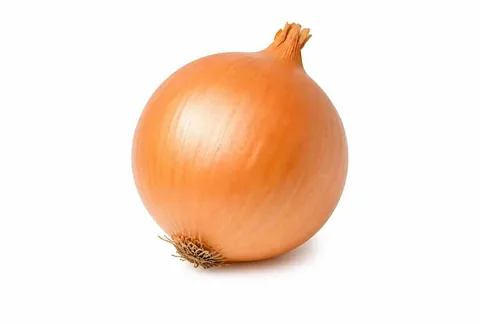
A traditional companion combination — onions and brassicas complement each other well and may help deter each other's main pests. Growing onions at the edges of a kohlrabi bed is a well-established kitchen garden practice.
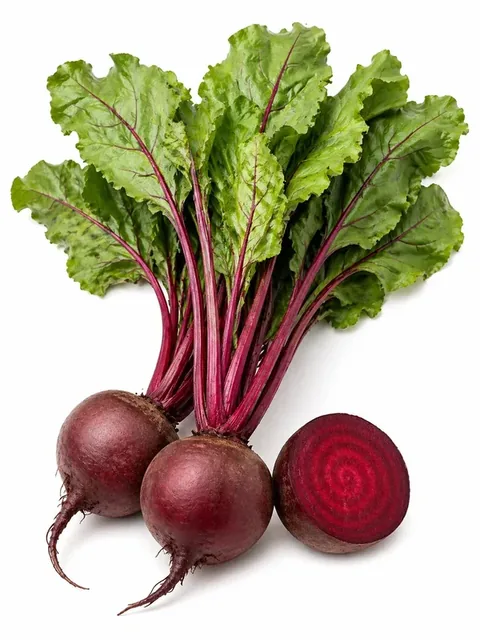
Beetroot and kohlrabi make efficient use of the same bed — both are compact, fast-growing crops that suit successional sowing in adjacent rows.
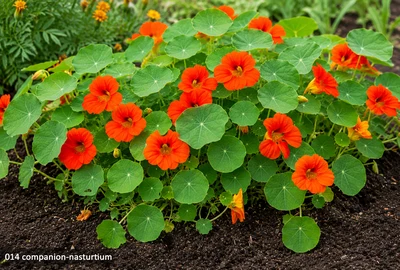
🌸 Nasturtiums
Nasturtiums act as a sacrificial trap crop, attracting aphids away from brassicas. Plant at the bed margins to protect kohlrabi from blackfly.
❌ Keep apart
🍅 Tomatoes — Nightshades and brassicas compete for nutrients — keep in separate beds and rotate annually.
🌿 Fennel — Fennel is allelopathic to most vegetables including brassicas. Keep well away from all kohlrabi plantings.
🍓 Strawberries — Both attract similar soil pests. Keep separate for best results from both crops.
07 Sowing — How To
Kohlrabi is one of the simplest brassicas to sow — direct sowing from March onwards is the standard approach. Modules work well for transplanting into gaps or getting a head start. The key is successional sowing every 2–3 weeks rather than one large batch, and netting immediately after emergence.
Sow direct
Draw a shallow drill 1cm deep. Sow seeds thinly at 2–3cm spacing. Rows 30cm apart. Cover lightly and firm gently. Water in. From March outdoors, germination takes 7–10 days.
Sow in modules
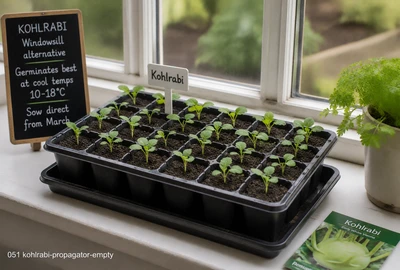
One seed per module at 1cm depth. Place on a cool, bright windowsill or in a cold frame at 10–18°C. Transplant carefully when seedlings have 3–4 true leaves — at 20–25cm spacing.
Thin seedlings
When direct-sown seedlings reach 5cm, thin to 20–25cm spacing. Use thinnings in salads — the small leaves are excellent. Never leave plants crowded — tight spacing produces small, distorted bulbs.
Net against pests
Immediately after sowing or transplanting, cover with fine insect-proof mesh (not fleece — it retains too much warmth). Flea beetle strikes fast and can defoliate young plants within days. Net first, every time.
Harvest
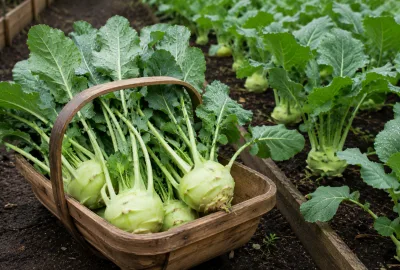
Standard varieties: harvest at 5–7cm diameter — do not delay as they become woody quickly. Giant varieties: can be left until much larger. Pull the whole plant, twist off leaves, and use immediately or store in the fridge.
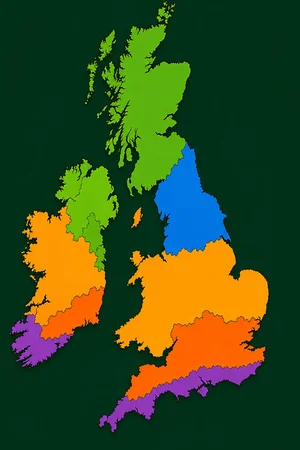
Regional sowing timing
Region
Sow / plant
Harvest
Notes
Scotland & Far North
Apr–Jul
Jun–Oct
Sow from April when soil warms. Two or three successional sowings give the best results within the shorter season. · Apr–Jul
Northern England
Mar–Aug
May–Oct
Direct sow from March in a sheltered spot. Net immediately. Successional sowing every 3 weeks gives continuous harvest. · Mar–Aug
Midlands & Wales
Mar–Aug
May–Oct
Long season. Sow every 2–3 weeks from March for continuous cropping from June to October. · Mar–Aug
Ireland & Isle of Man
Mar–Aug
May–Oct
Very well suited to the mild Atlantic climate. Sow every 2–3 weeks. Net against flea beetle throughout. · Mar–Aug
South & SE England
Mar–Aug
May–Nov
Widest window. Late August sowings can give harvests into November. Successional sowing is the key technique. · Mar–Aug
South Coast & SW
Mar–Sep
May–Nov
Latest sowings possible in September for autumn harvest. The mild climate suits kohlrabi very well. · Mar–Sep
08 Soil Requirements
pH
6.0–7.0
Best
Loam, Sandy loam
Tolerates
Clay loam
Avoid
Waterlogged, Compacted
💡 Light, fertile soil for quick growth. Heavy clay stunts development.
09 Ongoing Care
🪲 Pest Protection
Fine insect-proof mesh applied immediately after sowing or transplanting is the most important single action for kohlrabi. Flea beetle — the small jumping beetle that creates tiny round holes in leaves — can defoliate young plants within days and significantly reduce growth. The mesh must go on at sowing or planting time, not after damage appears. Cabbage white butterflies also target kohlrabi — the same mesh prevents egg-laying.
💧 Watering
Consistent moisture produces smooth, crisp, well-shaped bulbs. Irregular watering — particularly a dry period followed by heavy rain or watering — causes the stem to crack or split. Water regularly throughout the growing period, particularly during dry spells in June and July. Mulching between rows helps retain moisture. Containers need daily checking in warm weather.
✂️ Harvesting
Standard varieties must be harvested promptly — at 5–7cm diameter they are at their sweet, crisp best. Left much larger, the flesh becomes woody and fibrous. Check plants daily as they approach harvest size. Giant varieties (Superschmelz, Gigante) are bred to stay tender at much larger sizes and can be left to grow on. Young kohlrabi leaves are edible — use in salads or stir-fries; they're excellent and are often wasted.
10 Watch Out For
Warning
Kohlrabi left too long becomes woody and tough — standard varieties must be harvested at 5–7cm diameter without delay. Flea beetle is the primary pest threat; fine insect mesh applied immediately after sowing or transplanting is the only reliable protection. Net first, not after the damage appears. Giant varieties (Superschmelz, Kossak F1) are the exception — bred to stay tender at much larger sizes.
🐛 Insects & pests
🦋 Cabbage Moth Caterpillar — Wilting or collapse of the central growing point of cabbages and Brussels sprouts
🦋 Cabbage White Caterpillar — Yellow, ribbed, skittle-shaped eggs in neat clusters on the underside of leaves in summer
🐜 Aphids (Blackfly & Greenfly) — Curled, distorted, or stunted growing tips — aphids inject saliva that causes leaf curl to protect them
🐌 Slugs & Snails — Silver slime trails on leaves, soil, and pots — often the first sign before damage is found
🍄 Diseases to watch
🥦 Clubroot — Clubroot (Plasmodiophora brassicae) is arguably the most feared soil-borne disease in UK kitchen gardens. It persists in the soil as resting spores for up to 20 years — meaning a bed that becomes infected is effectively lost for brassica growing for two decades without extraordinary intervention. Crop rotation is the most critical preventive measure.
🔵 Downy Mildew — Downy mildew is caused by oomycetes (water moulds) and is completely unrelated to powdery mildew despite the similar name. It thrives in cool, wet, humid conditions and is most damaging in spring and autumn. Each host plant has its own specific downy mildew species. Lettuce downy mildew can destroy an entire bed within days in the right conditions.
Full identification and treatment advice is in the Pests and Diseases sections.
11 Storage & Preserving
🧊 Fridge Storage
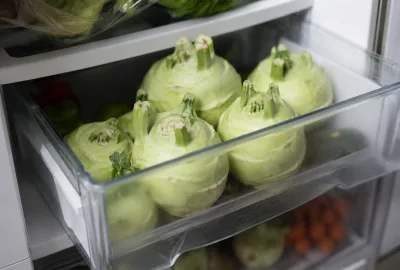
Kohlrabi keeps well in the fridge for up to 2 weeks. Remove the leaves and store the bulbs unwashed in a sealed bag in the salad drawer. The leaves deteriorate quickly and draw moisture from the bulb — always remove them before storage. Wash and peel just before use.
🌱 Harvest Little & Often
The best approach is successional sowing and harvesting on demand rather than storing a large batch. A row sown every 2–3 weeks gives fresh kohlrabi continuously through the season. Harvest standard types the moment they reach 5–7cm — do not leave them in the ground past their best.
🍳 Cooking Options
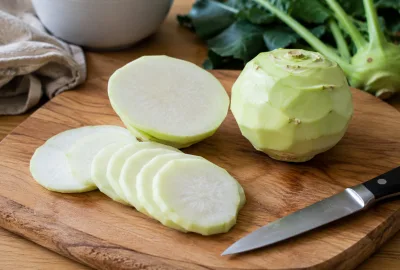
Kohlrabi is excellent raw — sliced into thin matchsticks or grated into slaws, it has a fresh, clean, slightly sweet flavour. Roasted in wedges at 200°C it caramelises beautifully. Steamed or boiled until just tender it works well as a side vegetable. The leaves can be cooked like spinach or kale. Use within a day of harvest for best raw eating.
12 Expert Tips
💡 Successional sowing is the whole game
A single large sowing of kohlrabi produces a feast-and-famine glut — all plants mature within a few days of each other. Sow a short row or half-tray every 2–3 weeks from March to August and you'll have fresh kohlrabi continuously from June to October. It takes under 5 minutes per sowing and transforms this crop from occasional to constant.
💡 Net first — no exceptions
Flea beetle is the main threat to kohlrabi seedlings and it moves fast. The tiny jumping beetles create small round holes in leaves and can defoliate young plants completely within a few days of emergence. Fine insect mesh over the bed from the moment of sowing is the only reliable protection. Fleece works as a temporary measure but mesh is better — it lets more light and rain through.
💡 Giant varieties are genuinely different
Superschmelz and Gigante are not standard kohlrabi left to overgrow — they are specifically bred varieties where the flesh remains crisp, sweet, and non-woody even at grapefruit size or larger. A single Superschmelz can weigh several kilograms and still be excellent raw or roasted. They need the same care as standard types but more space — 35–40cm between plants.
13 Common Mistakes
⚠ Sowing & Establishment
Sowing only once — a single batch all matures at once creating a glut; sow a short row every 2–3 weeks for continuous harvest
Delaying netting — flea beetle strikes within days of emergence and quickly defoliates young plants; net at sowing, not after damage appears
Planting into poorly prepared soil — firm, fertile ground produces the best bulb development; loose or nutrient-poor soil gives disappointing results
Sowing too thickly and failing to thin — overcrowded plants produce small, distorted bulbs; thin to 20–25cm without hesitation
⚠ Ongoing Care
Irregular watering — the main cause of split or cracked stems; keep soil consistently moist throughout the growing period
Leaving standard varieties too long — they become woody and pithy rapidly beyond 7–8cm; harvest promptly at 5–7cm
Neglecting to use the leaves — young kohlrabi leaves are edible and nutritious; use in salads or cook like spinach
Overcrowding — plants need 20–25cm each; cramped plants produce poor, elongated bulbs