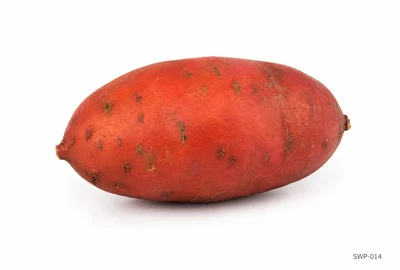
Beauregard
Orange · Slips
Red skin and sweet, salmon-orange flesh. One of the hardiest sweet potatoes, so the best pick for growing outdoors in the UK, and widely sold as slips.
- Beginners
- ⭐ Flavour
Ipomoea batatas
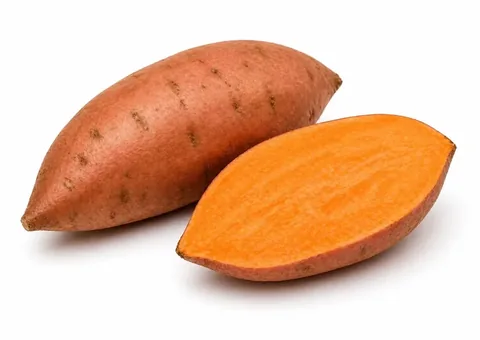
Sweet potatoes are tender, tropical plants grown for their tubers, and they need warmth, a long season and plenty of water. A greenhouse gives the best results; outdoors they need a very warm, sheltered, sunny spot, with cloches or fleece to keep them snug. Given that, a home-grown crop is well worth the effort.
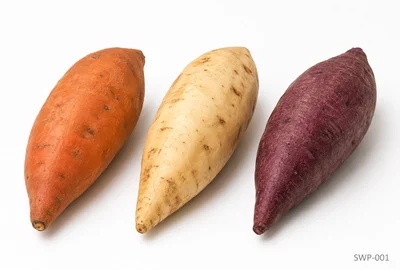
Sweet potatoes come in many sizes, shapes and colours. The three on this page are all sold in the UK. Beauregard, with red skin and sweet, salmon-orange flesh, is one of the hardiest and the best choice for growing outdoors; Bonita has pale tan skin with a pinkish blush and creamy-white flesh; and O'Henry has thin, off-white skin and white flesh. Most need four to five months or more of warm weather, so whichever you choose, start early and give it the warmest spot you have.
The number of varieties shown for each crop is based on UK consumption data (2025/26) — the more popular the crop, the more variety choices we include.
The classic sweet potato flavour — sweet, moist, and richly coloured. Most widely grown in the UK. Best for roasting, mashing, and wedges.
Red skin and sweet, salmon-orange flesh. One of the hardiest sweet potatoes, so the best pick for growing outdoors in the UK, and widely sold as slips.
Drier, more savoury, and less sweet than orange types. Excellent for roasting whole, chipping, and as a potato substitute.
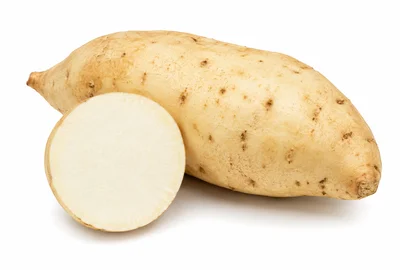
Thin, off-white skin and white flesh, a little drier than most sweet potatoes. Raised from Beauregard late in the 1990s and sold in the UK as young plants from mid-May.
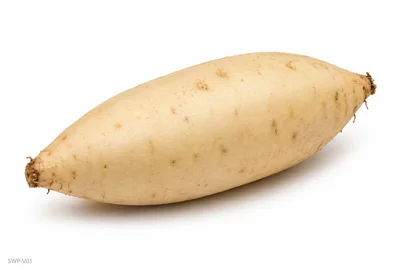
Pale tan skin with a faint pink blush, and creamy-white flesh with a gentle nutty flavour. Usually ready 90–110 days after planting; in colder areas it does best under glass.
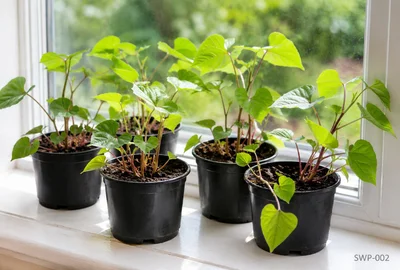
Sweet potatoes are grown from slips (unrooted cuttings) or plug plants (rooted cuttings), which online vegetable plant suppliers send out from late April; some garden centres sell young plants too. Order early, as they sell out. You can also raise your own slips from tubers you grew and stored the year before.
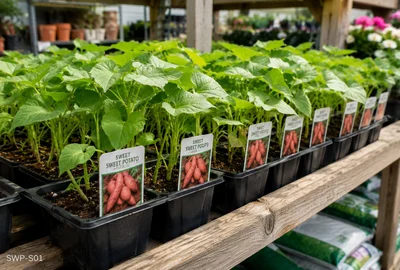
Online vegetable plant suppliers send out slips and plug plants from late April, and some garden centres sell young plants — a quicker route than raising your own, especially if space under cover is limited.
The usual way to grow sweet potatoes in the UK. Slips are cuttings taken from a sprouting tuber; plug plants are slips that have already rooted. Both grow away quickly if kept warm, bright and watered. Suppliers send them out from late April, or you can sprout your own from tubers stored from last year's crop.
Suitable varieties: All UK-suitable sweet potato varieties.
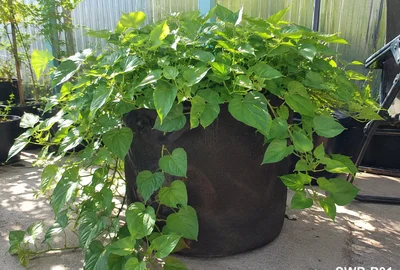
A pot 30cm or more across, filled with peat-free multipurpose compost, holds one plant in the centre; a grow bag works too. Pots are especially useful in northern gardens, where they can stand in a greenhouse or cold frame. Black containers absorb heat and help warm the root zone. Feed every 14 days through summer with a high-potash organic liquid feed, and water often — in hot weather, perhaps daily.
Suitable varieties: All varieties. Particularly useful in Scotland and Northern England where mobility under cover matters.
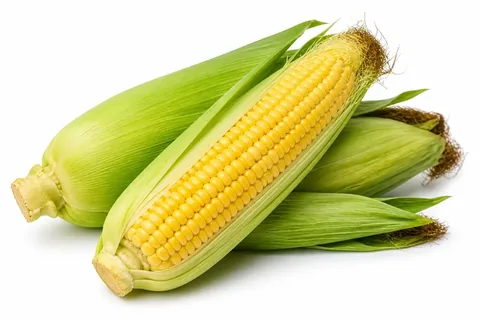
Grows upright while sweet potato vines spread below, making very efficient use of both vertical and horizontal space in a warm bed. A classic warm-season combination.
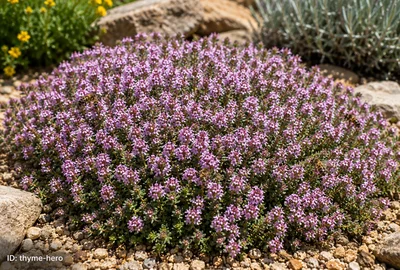
Low-growing thyme around the edges of the sweet potato bed helps suppress weeds without competing with the spreading vines.
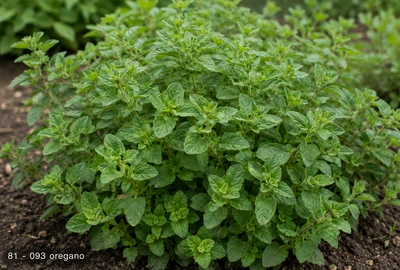
An unobtrusive, ground-level herb that sits happily at the margins of a sweet potato bed.
Sweet potatoes are grown from slips — shoots taken from a sprouting tuber — not from seed, and starting them takes warmth and planning ahead. Young plants stay inside somewhere warm until they have a good root system, then go out between May and June, under glass if possible. Outdoors, warm the soil first: slips planted into cold soil can rot instead of growing away.
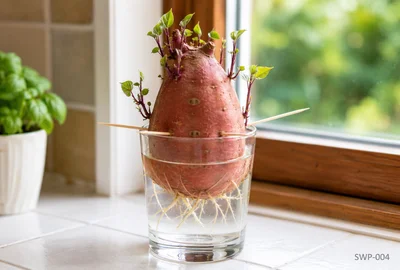
In spring, bed tubers saved from last year's crop into damp sand and keep them in a warm propagator or airing cupboard until they sprout. Some growers stand a tuber in a jar of water instead, with the lower third under water, on a warm windowsill. Shoots appear within a few weeks.
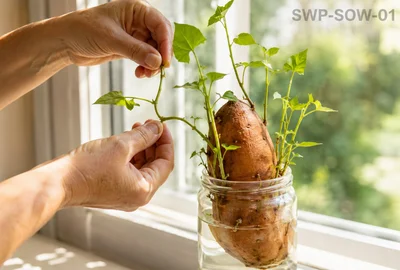
Once the shoots reach 5–7.5cm, slice them away where they join the tuber, using a sharp knife. Each shoot is a slip, and one tuber can give several. Handle them gently — fresh stems snap easily.
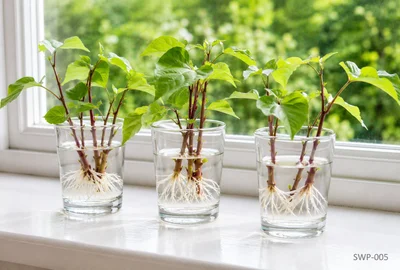
Slips can go straight into small pots of compost, where they root quickly, or be stood in a jar of water on a warm, bright windowsill until roots form. Change the water every few days so it stays fresh.
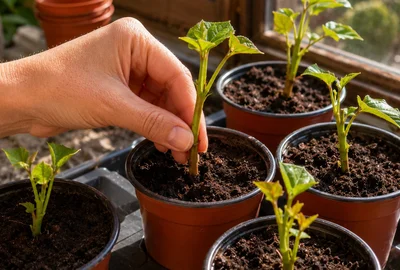
Pot each rooted slip into a small pot of peat-free multipurpose compost and keep it in a propagator, or under a clear plastic bag, somewhere warm and bright until it is growing strongly. Water with tepid water and move into slightly bigger pots as the plants grow.
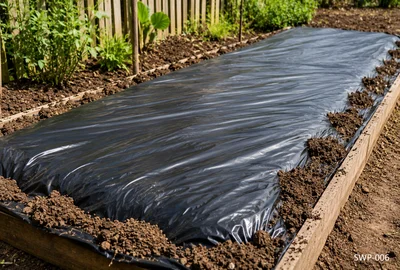
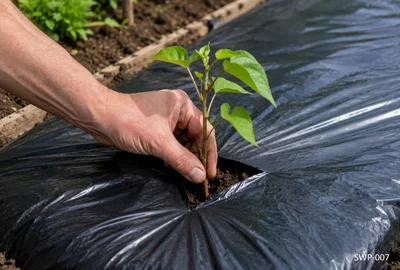
If planting outdoors, give the soil a few weeks to warm up first under cloches, fleece or black polythene with the edges held down, and cut planting slits at least 30cm apart. Inside a greenhouse, plant straight into the border, a grow bag or a large pot.
Harden plants off, then plant out between May and June, once the roots fill the pot and frosts are over — under glass if you can. Set each one at the depth it was growing, at least 30cm apart, firm in and water well. Do not plant into cold soil — slips can rot rather than establish.
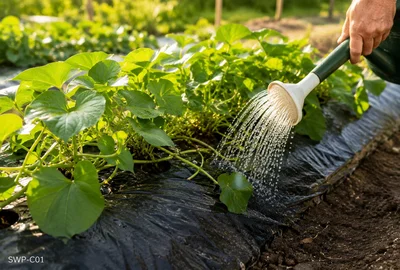
Water each plant in well after planting, and keep watering regularly from then on — sweet potatoes are thirsty, and the soil should stay evenly moist all summer. Push an empty pot into the soil next to each plant and fill it when you water, so the water soaks down to where it is needed.
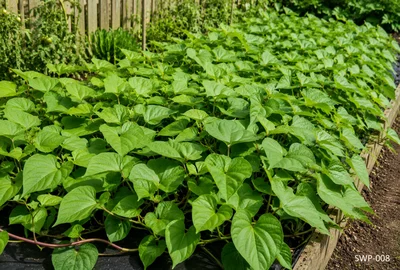
The vines grow fast in warm weather, reaching 1.5m or more. Let them sprawl, or train them up canes, strings or trellis to save space. If they outgrow their spot, trim back the most vigorous stems — the tender tips and leaves are good cooked like spinach.

| Region | Sow / plant | Harvest | Notes |
|---|---|---|---|
| Scotland & Far North | Jun | Sep | Sweet potatoes are marginal here. A greenhouse, polytunnel or cold frame gives the best chance — cloches and fleece over a very warm south-facing raised bed is a workable alternative. Plant in June only, and lift before any frost. Beauregard, one of the hardiest, is the best choice. · Plant slips Jun only |
| Northern England | May–Jun | Sep–Oct | A greenhouse, polytunnel or cold frame improves results significantly — a warm sheltered raised bed with cloches available for cool nights is a good alternative. Plant late May to June. Warm the soil first under cloches, fleece or black polythene. Harvest September to early October. · Plant slips late May–Jun |
| Midlands & Wales | May–Jun | Sep–Oct | Plant late May to June into soil warmed under cloches, fleece or black polythene. A sheltered south-facing bed gives good outdoor results. A cold frame or cloches helps in a cool summer. Harvest September to October. · Plant slips late May–Jun |
| Ireland & Isle of Man | May–Jun | Sep–Oct | Atlantic climate is cool and wet — a polytunnel or cold frame gives much better results than open ground. A warm south-facing wall with cloches is a workable alternative. Plant late May to June. · Plant slips late May–Jun |
| South & SE England | May–Jun | Sep–Oct | Best outdoor conditions in the UK for sweet potatoes. Plant from mid-May in a warm sheltered site, with the soil warmed first. A cold frame or cloches are a bonus but not necessary in a decent summer. Harvest September to October. · Plant slips mid-May–Jun |
| South Coast & SW | May–Jun | Sep–Oct | Most reliable UK region for outdoor sweet potato growing. Plant from early May. Harvest September to October, before any frost. Cold frames and cloches help in a cool summer. · Plant slips May–Jun |
Sweet potatoes are grown from slips — rooted shoots taken from a sprouting tuber — not from seed. Starting them requires warmth and planning ahead. A heated propagator gives the most reliable conditions for sprouting tubers and rooting slips, but a warm windowsill, airing cupboard, or the top of a boiler works very well. The key requirement is consistent warmth above 20°C.
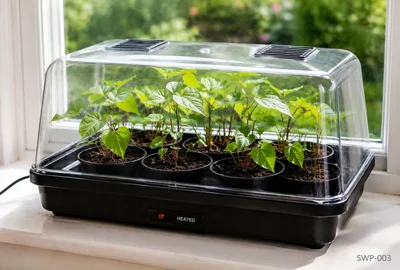
A heated propagator is the most reliable way to sprout tubers and root slips. Bed the tubers into damp sand inside it to sprout; later, use it to keep newly potted slips warm and humid until they are growing strongly.
An unheated propagator on a warm sunny windowsill works well from late March onwards when ambient temperatures are rising. Alternatively, place a clear polythene bag loosely over the pot to retain warmth and humidity. A warm airing cupboard is very good for sprouting the tubers in moist sand.
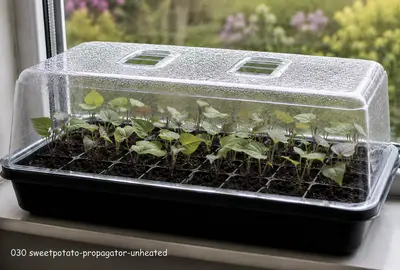
Standard unheated propagator — A lidded seed tray traps warmth and humidity around germinating seeds without electricity. Performance depends entirely on room temperature — best placed on a warm windowsill and used from March onwards. Replace the lid promptly after watering. Remove it completely the moment seedlings emerge to prevent damping off.
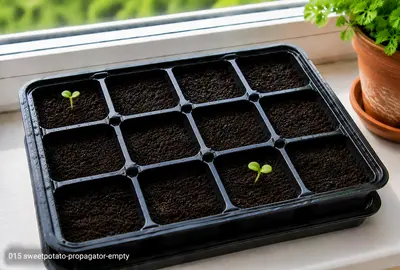
Sweet potatoes are thirsty plants. Water regularly in dry weather and keep the soil or compost evenly moist all season — if the plants go short, the tubers will not swell. Plants in pots may need water every day in hot weather. In the ground, a deep layer of compost or rotted manure over the soil helps hold moisture; water early or late in the day so less is lost.
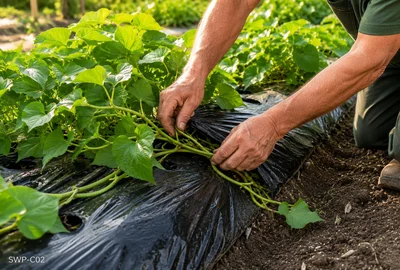
Sweet potato vines are vigorous and spread widely, reaching 1.5m or more. You can let them sprawl, tucking stray stems back onto the bed, or grow them on canes tied into a wigwam roughly 1.8m high, on wires or trellis fixed to a sunny wall, or up strings in a greenhouse, tying some stems in to start them climbing. They need no pruning, but over-vigorous stems can be trimmed back — the tender tips and leaves are good cooked like spinach. Cutting a lot of leaves, though, means fewer and smaller tubers.
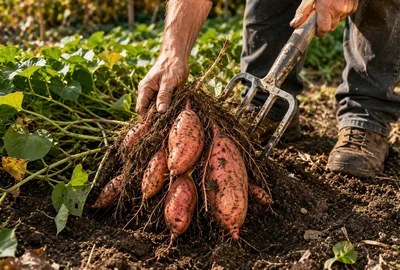
Lift the tubers when the foliage yellows and withers in early autumn — usually four to five months after planting — and always before any frost. Tip pot-grown plants out gently, or ease ground-grown ones up with a fork, working outward from the plant, as the tubers spread and bruise easily. Use any damaged tubers straight away.
Sweet potatoes are tender and need warmth all season — a cold, wet summer cuts the crop. A greenhouse gives the best results; outdoors, pick the warmest, most sheltered and sunniest spot you have, warm the soil first and keep cloches or fleece handy. Do not plant into cold soil, where slips can rot, and lift the crop before any frost. Under glass, keep an eye out for red spider mite and whitefly.
Full identification and treatment advice is in the Pests and Diseases sections.
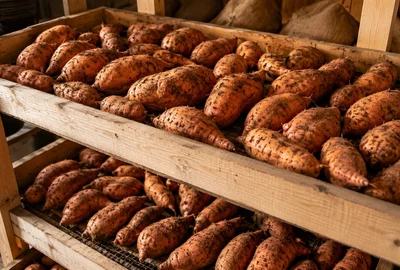
Leave freshly lifted tubers somewhere warm and sunny for a few days so the skins dry and toughen — this helps them keep. Growers who can hold them warm (about 28–30°C) and humid for about a week cure them more fully, which also heals small wounds and lets some of the starch turn to sugar.
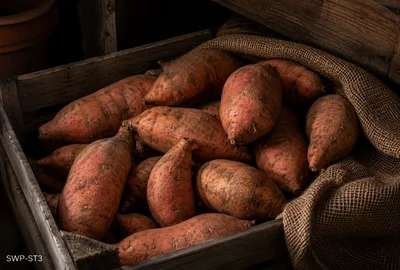
Keep the tubers in a dry, dark place at about 13–16°C and check them often for soft or rotting patches. Do not put raw sweet potatoes in the fridge — below about 13°C they suffer chilling damage, with dark, sunken patches and hard cores after cooking. Home-grown tubers often keep only a few weeks, so lift a plant or two at a time and use any damaged ones first.

Roasting brings out the natural sweetness of home-grown sweet potatoes more than any other method. Halve, brush with oil, and roast at 200°C until caramelised and tender. Baking whole in the skin concentrates the flavour. Cool any leftovers quickly, cover them and keep in the fridge, and eat within 2 days.
Set freshly lifted tubers out in warm sun for a few days so the skins dry and toughen — they keep better. Even so, home-grown tubers often keep only a few weeks, so lift just a plant or two at a time and check stored ones often.
If you are planting outdoors, warm the ground for a few weeks first under cloches, fleece or black polythene. Under glass is better still — sweet potatoes crop best at 21–26°C, which a greenhouse can give in a UK summer.
Do not cut back on water as the season goes on. Sweet potatoes need the soil kept evenly moist, and plants that go short of water make small tubers. A pot sunk into the soil beside each plant lets the water soak down to where it is needed.
Save a few good tubers from the harvest and, in spring, bed them into damp sand and keep them warm in a propagator or airing cupboard. When the shoots are 5–7.5cm long, cut them off and pot them up — one tuber can give several slips, saving the cost of bought plants.